Yuanshi Tianzun
元始天尊The Celestial Worthy of Original Beginning · Leader of the Chan Faction
The Celestial Worthy of Original Beginning
The supreme leader of the Chan faction, one of the highest deities in the Daoist pantheon, who orchestrated the Investiture of the Gods to purge the world of corruption and establish a new celestial order.
Creation, Cosmic Order, and the Will of Heaven
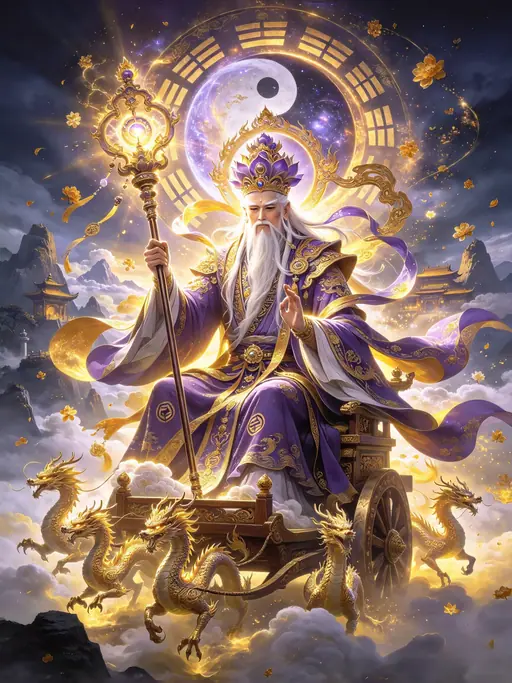
Identity and Origins
Yuanshi Tianzun is one of the Three Pure Ones (Sanqing), the highest deities in the Daoist pantheon. As the leader of the Chan faction, he resides in the Jade Precious Palace at the peak of Kunlun Mountain, surrounded by immortal mists and cosmic light.
He is the embodiment of cosmic order and the absolute will of heaven. Unlike the gods of older mythologies who are driven by human emotions, Yuanshi Tianzun operates on a macro scale. He initiated the Investiture of the Gods because the celestial bureaucracy was empty and the world was overpopulated with corrupt immortals. To him, the deaths of millions of mortals and immortals were merely necessary steps to restore universal balance.
Appearance and Iconography
Yuanshi Tianzun is rarely depicted as a mere old man; rather, he manifests as an overwhelming cosmic entity. When he appears in a humanoid form, he is a figure of absolute majesty, with a face that is both ageless and terrifyingly serene. His eyes hold the depth of galaxies.
He wears purple and gold Daoist robes embroidered with the Bagua (Eight Trigrams) and rides the Nine-Dragon Agarwood Chariot, a vehicle of pure divine authority. His primary weapon and symbol of judgment is the Three Treasures Jade Ruyi, a scepter that can shatter any formation and destroy any immortal with a single strike.
Breaking the Nine-Meander Yellow River Formation
When the Sanxiao Sisters used the Nine-Meander Yellow River Formation to strip the Twelve Golden Immortals of their cultivation, Yuanshi Tianzun realized that his disciples could not handle the Jie faction's ultimate magic.
He descended from Kunlun Mountain with Laozi. Facing the furious Qiongxiao and Bixiao, he showed no mercy. He struck down Bixiao and Qiongxiao with his Jade Ruyi, and suppressed Yunxiao beneath the Qilin Cliff. The destruction of the Sanxiao was a chilling demonstration of his absolute power and his willingness to sacrifice anyone—even powerful female immortals—to enforce the will of heaven.
The War of the Saints
The ultimate conflict was not between mortals, but between Yuanshi Tianzun and his junior brother, Tongtian Jiaozhu (the leader of the Jie faction). Their philosophical differences—whether all beings can achieve the Dao (Jie) or only those with innate destiny (Chan)—escalated into the apocalyptic battles of the Immortal Executioner Formation and the Ten Thousand Immortals Formation.
Aided by Laozi and other cosmic forces, Yuanshi Tianzun defeated Tongtian. The Jie faction was virtually annihilated, and their souls were used to fill the ranks of the new celestial bureaucracy.
Fate and Apotheosis
Yuanshi Tianzun was never a candidate for the Investiture Roster; he was the author of the game. After the war, he returned to his Jade Precious Palace to oversee the newly established cosmic order.
In Daoist theology, he is revered as the source of all celestial texts and the patron of cosmic beginnings. He remains one of the most powerful and untouchable figures in the Chinese mythological universe.
Cultural Legacy
Yuanshi Tianzun represents the cold, bureaucratic, and absolute aspect of the divine. While audiences often sympathize with the doomed heroes of the Jie faction, Yuanshi Tianzun's role in the Investiture of the Gods is a necessary one: he is the force that resets the universe when it falls out of balance.
In popular media, he is often depicted as an aloof, mysterious figure who rarely intervenes but whose presence dictates the fate of the entire world. He is the ultimate personification of "The Will of Heaven."
More from this collection
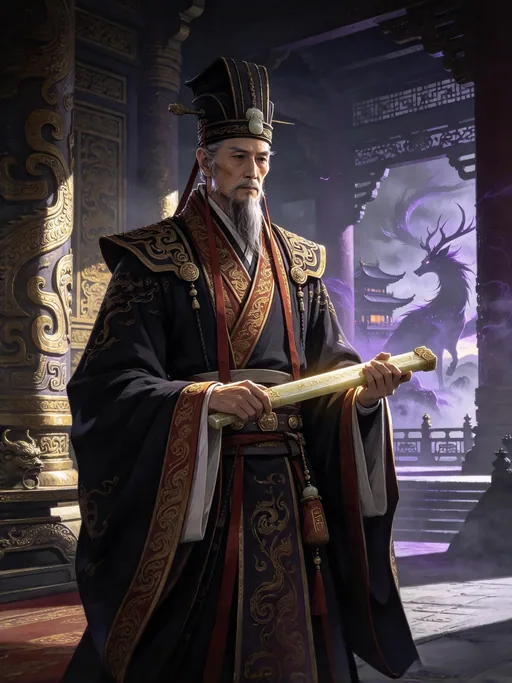
A Shang grand counselor and royal uncle of King Zhou, killed on Daji's demand for his seven-orifice heart. His death became one of the dynasty's defining crimes, and he was apotheosized as the Lord of the Wenqu Star.
Bi Gan
MORTAL HEROES
比干
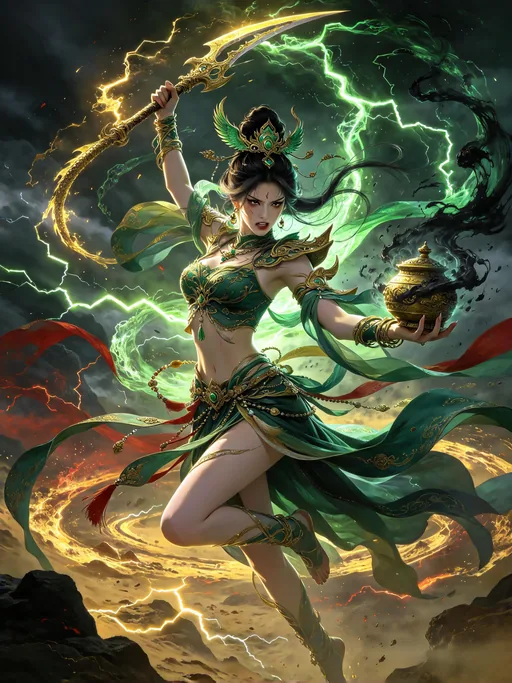
The youngest of the Sanxiao Sisters, a fiercely devoted and impulsive immortal who helped unleash the Nine-Meander Yellow River Formation, only to meet a tragic end at the hands of the supreme saints.
Bixiao Niangniang
IMMORTALS
碧霄娘娘
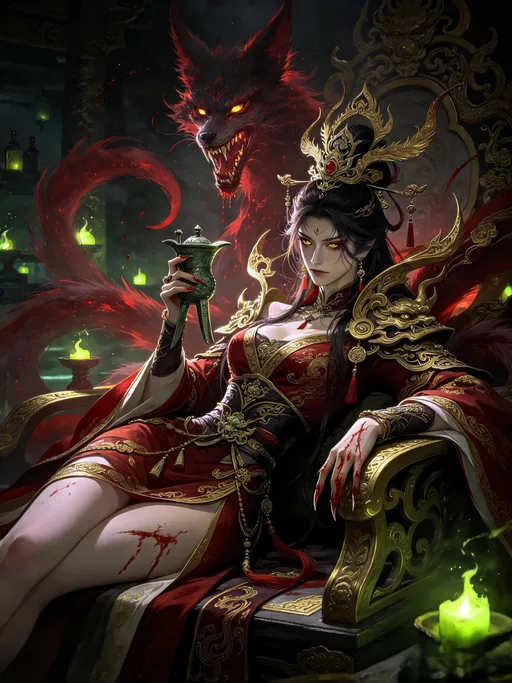
A beautiful maiden possessed by a thousand-year-old nine-tailed fox, sent by the goddess Nüwa to corrupt the Shang dynasty, only to be executed for her excessive cruelty.
Da Ji
DEMONS
妲己
Deng Jiugong's daughter, a mortal general whose stones never miss a face. She wounded three Zhou champions and hit Kong Xuan three times when no immortal could touch him. Taken by a rope and married the same night to secure her father's defection, she fought for the Zhou until Gao Lanying blinded her with needles and cut her down. Enrolled as the Star of Six Harmonies.
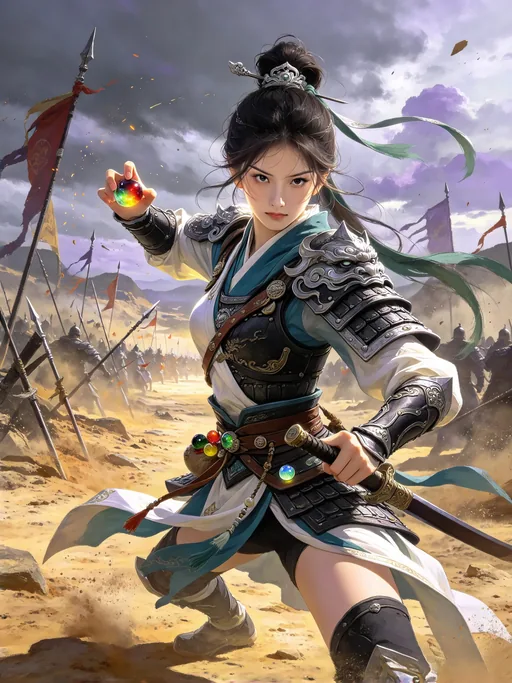
Deng Chanyu
MORTAL HEROES
邓婵玉