King Zhou
纣王Di Xin · The Tyrant of Shang
The Last King of Shang
The last king of the Shang dynasty, a man of immense physical strength and unparalleled arrogance, whose obsession with a fox demon brought an ancient empire to ashes.
Sovereignty, Tyranny, and Tragic Downfall
Identity and Origins
King Zhou, born Di Xin, was not originally a weak or incompetent ruler. In his youth, he was renowned for his incredible physical strength and sharp intellect. Legend states he could wrestle wild beasts and hold up a collapsing palace roof with his bare hands. He was the undisputed sovereign of the Shang dynasty, an empire that had stood for centuries.
However, his immense power bred unparalleled arrogance. He believed his rule was absolute and that no force—mortal or divine—could challenge him. This arrogance reached its peak when he visited the temple of the goddess Nüwa and, struck by her beauty, wrote a blasphemous poem on the wall, demanding she attend to him in his palace.
Appearance and Iconography
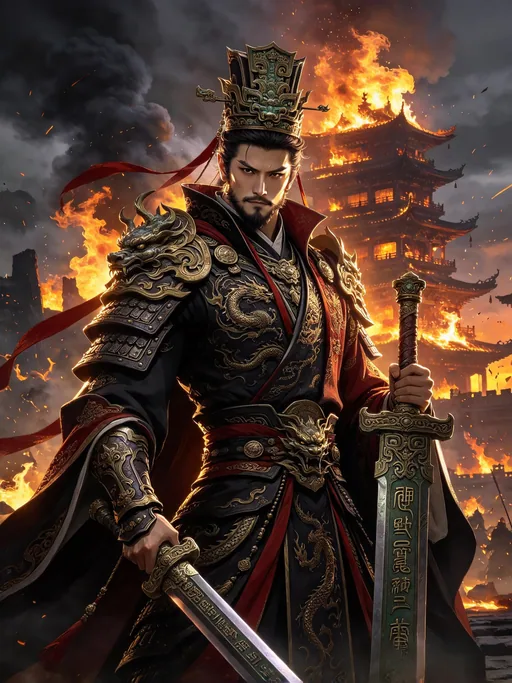
King Zhou is depicted as a towering, physically imposing figure with fierce eyes and a heavily bearded face. He wears the heavy, dark robes of the Shang monarchy, adorned with bronze and gold tiger motifs, symbolizing his martial prowess.
He wields a massive bronze royal sword, but his true weapon is his authority. In later parts of the story, he is often shown at the Star-Picking Tower (Zhaixinglou), a magnificent and decadent palace built entirely for his pleasure with Da Ji, which ultimately becomes the stage for his final, fiery end.
The Tyranny and the Fall
Enslaved by the fox demon Da Ji, King Zhou's reign spiraled into unimaginable cruelty. He ignored the counsel of his loyal Grand Preceptor Wen Zhong and built instruments of torture, such as the Paolao (a heated bronze pillar) and the Snake Pit. He executed his own queen, forced his uncle Bi Gan to cut out his own heart, and alienated the noble lords of the realm.
His tyranny eventually united the various lords under King Wu of Zhou and Jiang Ziya. Even as the Zhou army marched on his capital, Zhaoge, King Zhou remained fiercely defiant. He even personally led his troops in the final battles, killing several Zhou generals before his army was finally routed.
Fate and Apotheosis
When the city was finally breached and he realized all was lost, King Zhou refused to surrender. He returned to the Star-Picking Tower, clothed himself in his most precious jade garments, and set the palace on fire, burning himself to death in the flames rather than be captured by his enemies.
Despite his crimes, he was a sovereign and a key figure in the cosmic cycle. His soul was guided to the Investiture Roster and he was appointed as the "Star of Heavenly Joy" (Tianxixing). In a deeply ironic twist of fate, this cruel tyrant was assigned to govern human marriage and weddings in the celestial pantheon.
Cultural Legacy
King Zhou is the archetypal "last emperor" in Chinese history and mythology—a figure whose immense talents are overshadowed by his moral corruption. He is often compared to other historical tyrants like Nero, known for his decadence and cruelty while his empire burned.
Modern media often explores the psychological depth of his character, portraying him not just as a simple villain, but as a man who was seduced, manipulated, and ultimately destroyed by his own hubris and the cosmic powers he dared to offend.
More from this collection
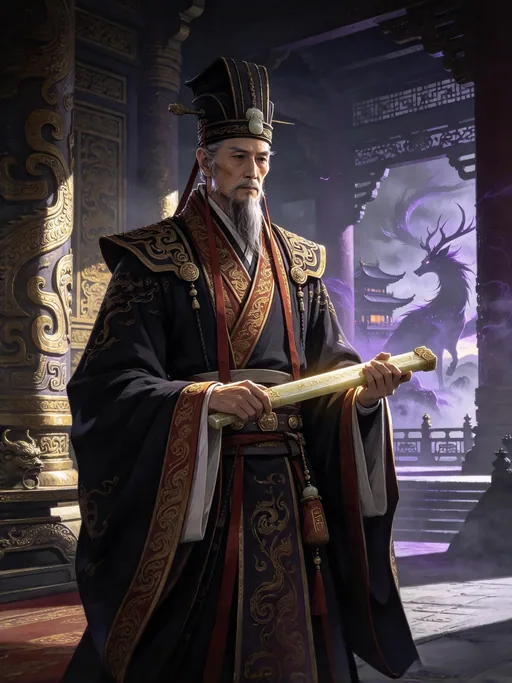
A Shang grand counselor and royal uncle of King Zhou, killed on Daji's demand for his seven-orifice heart. His death became one of the dynasty's defining crimes, and he was apotheosized as the Lord of the Wenqu Star.
Bi Gan
MORTAL HEROES
比干
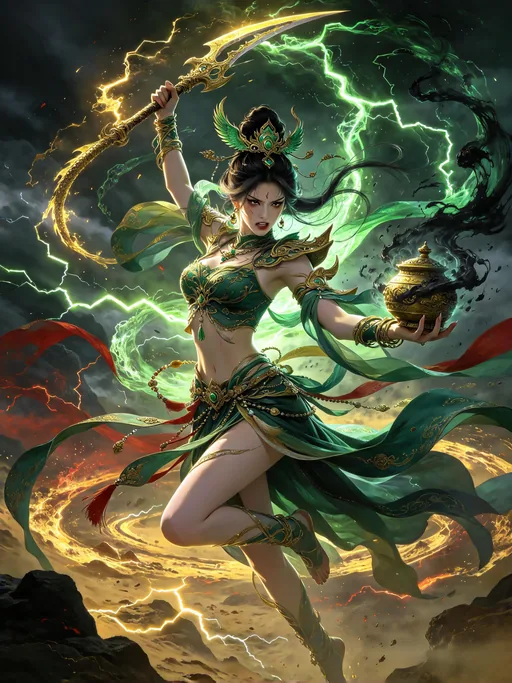
The youngest of the Sanxiao Sisters, a fiercely devoted and impulsive immortal who helped unleash the Nine-Meander Yellow River Formation, only to meet a tragic end at the hands of the supreme saints.
Bixiao Niangniang
IMMORTALS
碧霄娘娘
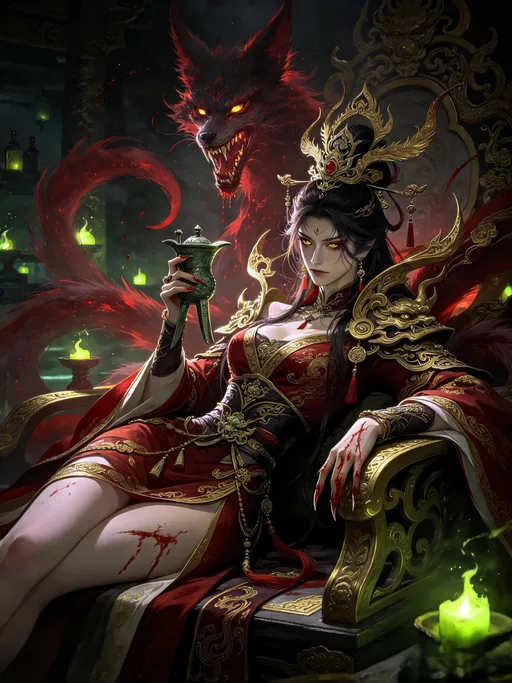
A beautiful maiden possessed by a thousand-year-old nine-tailed fox, sent by the goddess Nüwa to corrupt the Shang dynasty, only to be executed for her excessive cruelty.
Da Ji
DEMONS
妲己
Deng Jiugong's daughter, a mortal general whose stones never miss a face. She wounded three Zhou champions and hit Kong Xuan three times when no immortal could touch him. Taken by a rope and married the same night to secure her father's defection, she fought for the Zhou until Gao Lanying blinded her with needles and cut her down. Enrolled as the Star of Six Harmonies.
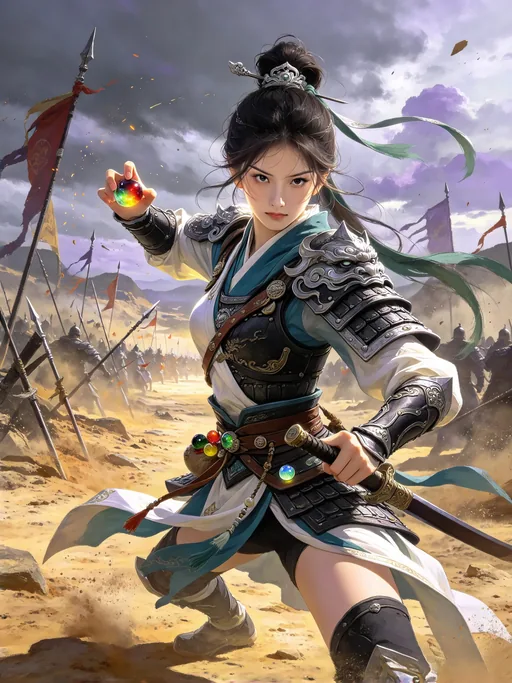
Deng Chanyu
MORTAL HEROES
邓婵玉